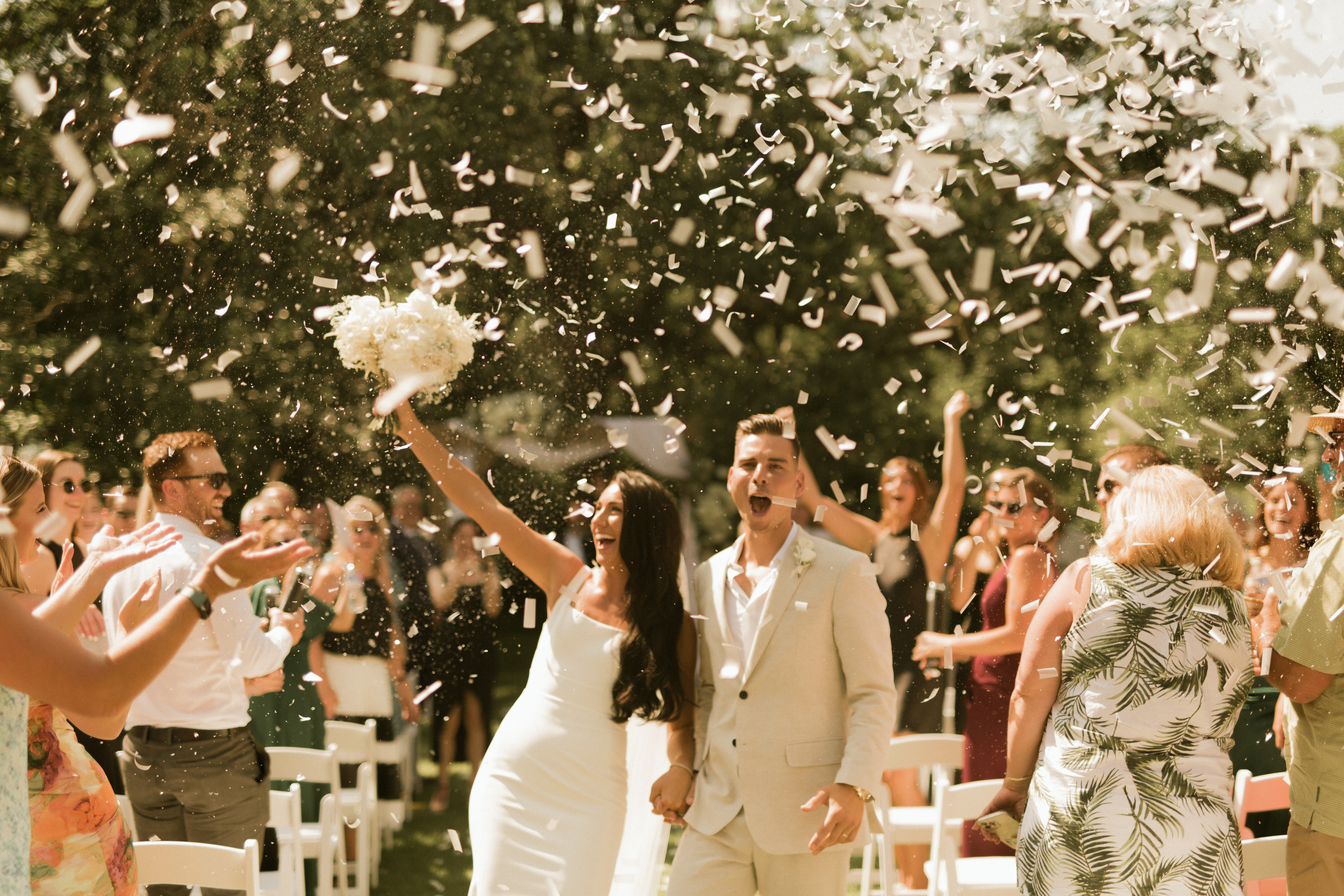
A Day That Moves at Its Own Pace
There is no such thing as a perfectly choreographed wedding day. Every timeline we receive has gaps, overlaps, and moments that the couple didn't anticipate. The ceremony ends early. The family portraits run long. The golden hour window shrinks to twelve minutes instead of forty. The speeches go off-script in the most beautiful way.
The craft of wedding videography — the part that separates a good film from a forgettable one — is how you respond to these shifts. We don't follow a shot list. We follow the energy. We watch the room, we anticipate where the emotion is building, and we position ourselves to catch it without interrupting it. After 120+ weddings across Manitoba, that kind of reading comes from experience that can't be scripted.
Composition and Light: The Visible Craft
Great wedding film composition is largely invisible. When it's working, you're not thinking about the frame — you're thinking about the people in it. We work with natural and ambient light wherever possible, because it produces warmth and depth that artificial lighting rarely matches. We understand how Manitoba's light behaves: the long prairie golden hours in summer, the flat diffused overcast days that actually flatter skin beautifully, the interior glow of a candlelit reception.
We also think in terms of layers — foreground, midground, background — because depth on a two-dimensional screen is what makes a shot feel cinematic rather than flat. A couple in sharp focus with soft bokeh behind them isn't just aesthetically pleasing — it directs your eye exactly where we want it. Every compositional choice is a decision about where your attention should go.
"We don't film your wedding day. We watch it, and we find the twenty frames inside it that, cut together, tell the whole truth of who you are."
Sound: The Invisible Heart of Every Great Film
If you could only improve one thing about a wedding film, it would be the audio — not the image quality, not the colour grade, not the music. Audio. The reason is simple: humans are far more forgiving of imperfect images than imperfect sound. We register audio issues immediately and viscerally. A vow delivered clearly and warmly on a wireless microphone will move you to tears regardless of the image behind it. The same vow captured on a distant camera microphone will feel cold and distant, even if the image is beautiful.
We use wireless lavalier microphones on the groom and officiant, record directly from the ceremony soundboard when available, and run dual-channel backups as standard practice. We monitor audio levels throughout the ceremony and reception. It is the detail our clients rarely know to ask about — and the one that matters most to what they feel when they watch their film.
Editing: Where the Story Is Actually Born
The film you receive was assembled from somewhere between 6 and 14 hours of raw footage. The editorial process — choosing which moments to use, in what order, at what pace, against what music — is where the storytelling actually happens. It's also where the most time is spent. A typical highlight film represents 40 to 80 hours of editing work across multiple passes.
We pay particular attention to pacing: the relationship between the rhythm of the cut, the emotional arc of the music, and the content of the image. A fast cut works in one context and destroys the mood in another. We build films that breathe — that know when to slow down and let a moment land, and when to accelerate into a sequence that feels like pure joy.
What We Want You to Feel When You Watch It
After every wedding, there's a moment when we watch a rough cut of the edit and ask ourselves one question: does this feel true? Not beautiful — though we want it to be beautiful. Not technically impressive — though we care about the craft. True. Does it feel like the couple we met? Does it capture what the day actually was, emotionally, not just visually?
That's the standard we hold ourselves to. And when a couple watches their film for the first time and goes quiet — that silence, followed eventually by something like relief or recognition — that's the answer we're looking for.
If you'd like to see examples of our work, explore our portfolio on the home page or reach out to start a conversation about your wedding day.